The book for November is Our Souls at Night by Kent Haruf.. The next meeting is November 29 at 2pm.
From the Publisher:
In the familiar setting of Holt, Colorado, home to all of Kent Haruf's inimitable fiction, Addie Moore pays an unexpected visit to a neighbor, Louis Waters. Her husband died years ago, as did his wife, and in such a small town they naturally have known of each other for decades; in fact, Addie was quite fond of Louis's wife. His daughter lives hours away, her son even farther, and Addie and Louis have long been living alone in empty houses, the nights so terribly lonely, especially with no one to talk with. But maybe that could change? As Addie and Louis come to know each other better--their pleasures and their difficulties--a beautiful story of second chances unfolds, making Our Souls at Night the perfect final installment to this beloved writer's enduring contribution to American literature.
This book is available from the Public Library.
Wednesday, October 26, 2016
Friday, September 30, 2016
October's Book
The book for October is The Art Forger by B.A. Shapiro. The next meeting is October 25 at 2pm in room Y-102.
From the Publisher:
Almost twenty-five years after the infamous art heist at the Isabella Stewart Gardner Museum—still the largest unsolved art theft in history—one of the stolen Degas paintings is delivered to the Boston studio of a young artist. Claire Roth has entered into a Faustian bargain with a powerful gallery owner by agreeing to forge the Degas in exchange for a one-woman show in his renowned gallery. But as she begins her work, she starts to suspect that this long-missing masterpiece—the very one that had been hanging at the Gardner for one hundred years—may itself be a forgery. The Art Forger is a thrilling novel about seeing—and not seeing—the secrets that lie beneath the canvas.
Available from the Alachua County Public Library
From the Publisher:
Almost twenty-five years after the infamous art heist at the Isabella Stewart Gardner Museum—still the largest unsolved art theft in history—one of the stolen Degas paintings is delivered to the Boston studio of a young artist. Claire Roth has entered into a Faustian bargain with a powerful gallery owner by agreeing to forge the Degas in exchange for a one-woman show in his renowned gallery. But as she begins her work, she starts to suspect that this long-missing masterpiece—the very one that had been hanging at the Gardner for one hundred years—may itself be a forgery. The Art Forger is a thrilling novel about seeing—and not seeing—the secrets that lie beneath the canvas.
Available from the Alachua County Public Library
Thursday, July 28, 2016
August's Book
The book for August is The Marrying of Chani Kaufman by Eve Harris. The next meeting will be Tuesday, August 30 at 2pm.
From the Publisher:
Perhaps the most surprising and intriguing novel on the Man Booker Prize longlist, The Marrying of Chani Kaufman is a debut originally published by a small independent Scottish press that is already garnering significant attention worldwide.
London, 2008. Chani Kaufman is a nineteen-year-old woman, betrothed to Baruch Levy, a young man whom she has seen only four times before their wedding day. The novel begins with Chani standing “like a pillar of salt,” wearing a wedding dress that has been passed between members of her family and has the yellowed underarms and rows of alteration stitches to prove it. All of the cups of cold coffee and small talk with men referred to Chani’s parents have led up to this moment. But the happiness Chani and Baruch feel is more than counterbalanced by their anxiety: about the realities of married life; about whether they will be able to have fewer children than Chani’s mother, who has eight daughters; and, most frighteningly, about the unknown, unspeakable secrets of the wedding night. As the book moves back to tell the story of Chani and Baruch’s unusual courtship, it throws into focus a very different couple: Rabbi Chaim Zilberman and his wife, Rebbetzin Rivka Zilberman. As Chani and Baruch prepare for a shared lifetime, Chaim and Rivka struggle to keep their marriage alive—and all four, together with the rest of the community, face difficult decisions about the place of faith and family life in the contemporary world.
From the Publisher:
Perhaps the most surprising and intriguing novel on the Man Booker Prize longlist, The Marrying of Chani Kaufman is a debut originally published by a small independent Scottish press that is already garnering significant attention worldwide.
London, 2008. Chani Kaufman is a nineteen-year-old woman, betrothed to Baruch Levy, a young man whom she has seen only four times before their wedding day. The novel begins with Chani standing “like a pillar of salt,” wearing a wedding dress that has been passed between members of her family and has the yellowed underarms and rows of alteration stitches to prove it. All of the cups of cold coffee and small talk with men referred to Chani’s parents have led up to this moment. But the happiness Chani and Baruch feel is more than counterbalanced by their anxiety: about the realities of married life; about whether they will be able to have fewer children than Chani’s mother, who has eight daughters; and, most frighteningly, about the unknown, unspeakable secrets of the wedding night. As the book moves back to tell the story of Chani and Baruch’s unusual courtship, it throws into focus a very different couple: Rabbi Chaim Zilberman and his wife, Rebbetzin Rivka Zilberman. As Chani and Baruch prepare for a shared lifetime, Chaim and Rivka struggle to keep their marriage alive—and all four, together with the rest of the community, face difficult decisions about the place of faith and family life in the contemporary world.
Wednesday, May 25, 2016
June's Book
June's meeting will be Tuesday, June 28 at 2:00 pm. (This meeting will be in Y-102)
The book for June is Florence Gordon by Brian Morton
From the Publisher:
Meet Florence Gordon, a blunt, brilliant feminist. At seventy-five, Florence wants to be left alone to write her memoir and shape her legacy. But when her son and his family come to visit, they embroil Florence in their dramas, threatening her coveted solitude. Marked with searing wit, sophisticated intelligence, and a tender respect for humanity, Florence Gordon is cast with a constellation of unforgettable characters. Chief among them is Florence herself, who can humble fools with a single barbed line, but who eventually finds that there are some realities even she cannot outwit.
The book for June is Florence Gordon by Brian Morton
From the Publisher:
Meet Florence Gordon, a blunt, brilliant feminist. At seventy-five, Florence wants to be left alone to write her memoir and shape her legacy. But when her son and his family come to visit, they embroil Florence in their dramas, threatening her coveted solitude. Marked with searing wit, sophisticated intelligence, and a tender respect for humanity, Florence Gordon is cast with a constellation of unforgettable characters. Chief among them is Florence herself, who can humble fools with a single barbed line, but who eventually finds that there are some realities even she cannot outwit.
Wednesday, May 11, 2016
May's Book
May's meeting will be Tuesday, May 24 at 2:00 pm. (This meeting will be in Y-102)
The book for May is A Spool of Blue Thread by Anne Tyler

From the Publisher:
NEW YORK TIMES BESTSELLER | SHORTLISTED FOR THE MAN BOOKER PRIZE | NAMED ONE OF THE TEN BEST BOOKS OF THE YEAR BY PEOPLE AND USA TODAY | NAMED ONE OF THE BEST BOOKS OF THE YEAR BY The Washington Post • NPR • Chicago Tribune • St. Louis Post-Dispatch • The Telegraph • BookPage
“It was a beautiful, breezy, yellow-and-green afternoon. . . . ” This is how Abby Whitshank always describes the day she fell in love with Red in July 1959. The Whitshanks are one of those families that radiate an indefinable kind of specialness, but like all families, their stories reveal only part of the picture: Abby and Red and their four grown children have accumulated not only tender moments, laughter, and celebrations, but also jealousies, disappointments, and carefully guarded secrets. From Red’s parents, newly arrived in Baltimore in the 1920s, to the grandchildren carrying the Whitshank legacy boisterously into the twenty-first century, here are four generations of lives unfolding in and around the sprawling, lovingly worn house that has always been their anchor.
This book is available at the Alachua County Public Library.
The book for May is A Spool of Blue Thread by Anne Tyler

From the Publisher:
NEW YORK TIMES BESTSELLER | SHORTLISTED FOR THE MAN BOOKER PRIZE | NAMED ONE OF THE TEN BEST BOOKS OF THE YEAR BY PEOPLE AND USA TODAY | NAMED ONE OF THE BEST BOOKS OF THE YEAR BY The Washington Post • NPR • Chicago Tribune • St. Louis Post-Dispatch • The Telegraph • BookPage
“It was a beautiful, breezy, yellow-and-green afternoon. . . . ” This is how Abby Whitshank always describes the day she fell in love with Red in July 1959. The Whitshanks are one of those families that radiate an indefinable kind of specialness, but like all families, their stories reveal only part of the picture: Abby and Red and their four grown children have accumulated not only tender moments, laughter, and celebrations, but also jealousies, disappointments, and carefully guarded secrets. From Red’s parents, newly arrived in Baltimore in the 1920s, to the grandchildren carrying the Whitshank legacy boisterously into the twenty-first century, here are four generations of lives unfolding in and around the sprawling, lovingly worn house that has always been their anchor.
This book is available at the Alachua County Public Library.
Wednesday, March 30, 2016
April's Book
The next Greedy Reader meeting will be Tuesday, April 26 at 2:00 pm in room Y-102.
The Book for April is At the Water's Edge by Sara Gruen.
After disgracing themselves at a high society New Year’s Eve party in Philadelphia in 1944, Madeline Hyde and her husband, Ellis, are cut off financially by his father, a former army colonel who is already ashamed of his son’s inability to serve in the war. When Ellis and his best friend, Hank, decide that the only way to regain the Colonel’s favor is to succeed where the Colonel very publicly failed—by hunting down the famous Loch Ness monster—Maddie reluctantly follows them across the Atlantic, leaving her sheltered world behind.
The trio find themselves in a remote village in the Scottish Highlands, where the locals have nothing but contempt for the privileged interlopers. Maddie is left on her own at the isolated inn, where food is rationed, fuel is scarce, and a knock from the postman can bring tragic news. Yet she finds herself falling in love with the stark beauty and subtle magic of the Scottish countryside. Gradually she comes to know the villagers, and the friendships she forms with two young women open her up to a larger world than she knew existed. Maddie begins to see that nothing is as it first appears: the values she holds dear prove unsustainable, and monsters lurk where they are least expected.
As she embraces a fuller sense of who she might be, Maddie becomes aware not only of the dark forces around her, but of life’s beauty and surprising possibilities.
This book is available at the Alachua County Public Library.
The Book for April is At the Water's Edge by Sara Gruen.
After disgracing themselves at a high society New Year’s Eve party in Philadelphia in 1944, Madeline Hyde and her husband, Ellis, are cut off financially by his father, a former army colonel who is already ashamed of his son’s inability to serve in the war. When Ellis and his best friend, Hank, decide that the only way to regain the Colonel’s favor is to succeed where the Colonel very publicly failed—by hunting down the famous Loch Ness monster—Maddie reluctantly follows them across the Atlantic, leaving her sheltered world behind.
The trio find themselves in a remote village in the Scottish Highlands, where the locals have nothing but contempt for the privileged interlopers. Maddie is left on her own at the isolated inn, where food is rationed, fuel is scarce, and a knock from the postman can bring tragic news. Yet she finds herself falling in love with the stark beauty and subtle magic of the Scottish countryside. Gradually she comes to know the villagers, and the friendships she forms with two young women open her up to a larger world than she knew existed. Maddie begins to see that nothing is as it first appears: the values she holds dear prove unsustainable, and monsters lurk where they are least expected.
As she embraces a fuller sense of who she might be, Maddie becomes aware not only of the dark forces around her, but of life’s beauty and surprising possibilities.
This book is available at the Alachua County Public Library.
Wednesday, October 28, 2015
November's Book
November's Meeting will be Tuesday, November 17 at 2:00 pm.
The book for October is All the Light We Cannot See by Anthony Doerr
From Booklist
*Starred Review* A novel to live in, learn from, and feel bereft over when the last page is turned, Doerr’s magnificently drawn story seems at once spacious and tightly composed. It rests, historically, during the occupation of France during WWII, but brief chapters told in alternating voices give the overall—and long—narrative a swift movement through time and events. We have two main characters, each one on opposite sides in the conflagration that is destroying Europe. Marie-Louise is a sightless girl who lived with her father in Paris before the occupation; he was a master locksmith for the Museum of Natural History. When German forces necessitate abandonment of the city, Marie-Louise’s father, taking with him the museum’s greatest treasure, removes himself and his daughter and eventually arrives at his uncle’s house in the coastal city of Saint-Malo. Young German soldier Werner is sent to Saint-Malo to track Resistance activity there, and eventually, and inevitably, Marie-Louise’s and Werner’s paths cross. It is through their individual and intertwined tales that Doerr masterfully and knowledgeably re-creates the deprived civilian conditions of war-torn France and the strictly controlled lives of the military occupiers.High-Demand Backstory: A multipronged marketing campaign will make the author’s many fans aware of his newest book, and extensive review coverage is bound to enlist many new fans. --Brad Hooper
Pulitzer Prize Winner 2014
The book for October is All the Light We Cannot See by Anthony Doerr
*Starred Review* A novel to live in, learn from, and feel bereft over when the last page is turned, Doerr’s magnificently drawn story seems at once spacious and tightly composed. It rests, historically, during the occupation of France during WWII, but brief chapters told in alternating voices give the overall—and long—narrative a swift movement through time and events. We have two main characters, each one on opposite sides in the conflagration that is destroying Europe. Marie-Louise is a sightless girl who lived with her father in Paris before the occupation; he was a master locksmith for the Museum of Natural History. When German forces necessitate abandonment of the city, Marie-Louise’s father, taking with him the museum’s greatest treasure, removes himself and his daughter and eventually arrives at his uncle’s house in the coastal city of Saint-Malo. Young German soldier Werner is sent to Saint-Malo to track Resistance activity there, and eventually, and inevitably, Marie-Louise’s and Werner’s paths cross. It is through their individual and intertwined tales that Doerr masterfully and knowledgeably re-creates the deprived civilian conditions of war-torn France and the strictly controlled lives of the military occupiers.High-Demand Backstory: A multipronged marketing campaign will make the author’s many fans aware of his newest book, and extensive review coverage is bound to enlist many new fans. --Brad Hooper
Pulitzer Prize Winner 2014
Thursday, October 22, 2015
October's Book
The October Meeting will be Tuesday, October 27 at 2pm in room Y-233.
The Book for October is Americanah by Chimamanda Ngozi Adichie.
From Booklist: *Starred Review* To the women in the hair-braiding salon, Ifemelu seems to have everything a Nigerian immigrant in America could desire, but the culture shock, hardships, and racism she’s endured have left her feeling like she has “cement in her soul.” Smart, irreverent, and outspoken, she reluctantly left Nigeria on a college scholarship. Her aunty Uju, the pampered mistress of a general in Lagos, is now struggling on her own in the U.S., trying to secure her medical license. Ifemelu’s discouraging job search brings on desperation and depression until a babysitting gig leads to a cashmere-and-champagne romance with a wealthy white man. Astonished at the labyrinthine racial strictures she’s confronted with, Ifemelu, defining herself as a “Non-American Black,” launches an audacious, provocative, and instantly popular blog in which she explores what she calls Racial Disorder Syndrome. Meanwhile, her abandoned true love, Obinze, is suffering his own cold miseries as an unwanted African in London. MacArthur fellow Adichie (The Thing around Your Neck, 2009) is a word-by-word virtuoso with a sure grasp of social conundrums in Nigeria, East Coast America, and England; an omnivorous eye for resonant detail; a gift for authentic characters; pyrotechnic wit; and deep humanitarianism. Americanah is a courageous, world-class novel about independence, integrity, community, and love and what it takes to become a “full human being.” --Donna Seaman
The Book for October is Americanah by Chimamanda Ngozi Adichie.
From Booklist: *Starred Review* To the women in the hair-braiding salon, Ifemelu seems to have everything a Nigerian immigrant in America could desire, but the culture shock, hardships, and racism she’s endured have left her feeling like she has “cement in her soul.” Smart, irreverent, and outspoken, she reluctantly left Nigeria on a college scholarship. Her aunty Uju, the pampered mistress of a general in Lagos, is now struggling on her own in the U.S., trying to secure her medical license. Ifemelu’s discouraging job search brings on desperation and depression until a babysitting gig leads to a cashmere-and-champagne romance with a wealthy white man. Astonished at the labyrinthine racial strictures she’s confronted with, Ifemelu, defining herself as a “Non-American Black,” launches an audacious, provocative, and instantly popular blog in which she explores what she calls Racial Disorder Syndrome. Meanwhile, her abandoned true love, Obinze, is suffering his own cold miseries as an unwanted African in London. MacArthur fellow Adichie (The Thing around Your Neck, 2009) is a word-by-word virtuoso with a sure grasp of social conundrums in Nigeria, East Coast America, and England; an omnivorous eye for resonant detail; a gift for authentic characters; pyrotechnic wit; and deep humanitarianism. Americanah is a courageous, world-class novel about independence, integrity, community, and love and what it takes to become a “full human being.” --Donna Seaman
Sunday, September 13, 2015
September's Book
September's Meeting will be Tuesday, September 29 at 2:00 pm.
The book for September is Orphan Train by Christina Baker Kline
From Library Journal - Kline's latest novel (after Bird in Hand) weaves contemporary and historical fiction into a compelling story about loss, adaptability, and courage. Molly is a rebellious 17-year-old foster child sentenced to community service for stealing a copy of Jane Eyre. She finds a position cleaning out the attic of Vivian, an elderly woman in their coastal Maine town. As Molly sorts through old trunks and boxes, Vivian begins to share stories from her past. Born in County Galway, she immigrated to New York City in 1929. When her family perished in a tenement fire, she was packed off on one of the many orphan trains intended to bring children to Midwestern families who would care for them. Each orphan's lot was largely dependent on the luck of the draw. In this, Vivian's life parallels Molly's, and an unlikely friendship blossoms. VERDICT With compassion and delicacy Kline presents a little-known chapter of American history and draws comparisons with the modern-day foster care system. Her accessible, interesting novel will appeal to readers who enjoy the work of Sara Donati. [See Prepub Alert, 10/22/12.]—Christine Perkins, Bellingham P.L., WA
Available from The Alachua County Public Library.
The book for September is Orphan Train by Christina Baker Kline
From Library Journal - Kline's latest novel (after Bird in Hand) weaves contemporary and historical fiction into a compelling story about loss, adaptability, and courage. Molly is a rebellious 17-year-old foster child sentenced to community service for stealing a copy of Jane Eyre. She finds a position cleaning out the attic of Vivian, an elderly woman in their coastal Maine town. As Molly sorts through old trunks and boxes, Vivian begins to share stories from her past. Born in County Galway, she immigrated to New York City in 1929. When her family perished in a tenement fire, she was packed off on one of the many orphan trains intended to bring children to Midwestern families who would care for them. Each orphan's lot was largely dependent on the luck of the draw. In this, Vivian's life parallels Molly's, and an unlikely friendship blossoms. VERDICT With compassion and delicacy Kline presents a little-known chapter of American history and draws comparisons with the modern-day foster care system. Her accessible, interesting novel will appeal to readers who enjoy the work of Sara Donati. [See Prepub Alert, 10/22/12.]—Christine Perkins, Bellingham P.L., WA
Available from The Alachua County Public Library.
Wednesday, August 19, 2015
August's Book
August's Meeting will be Tuesday, August 25 at 2:00 pm.
The book for August is 97 Orchard: An Edible History of Five Immigrant Families in One New York Tenement by Jane Ziegelman
From Library Journal - Ninety-seven Orchard was an address shared by five immigrant families who lived in one tenement building at different times from the end of the Civil War up to World War II. Ziegelman, who will direct the Culinary Center to open at New York's Tenement Museum, which is the actual 97 Orchard building, documents, in a manner not often found in such social histories, their struggles to adjust to a new way of life in America. Interspersed among the tales of each group are culinary details and specific recipes that add vividly to the flavor and texture of the descriptions of the hardscrabble life these families—German, Irish, Jewish, and Italian—experienced. The multitude of gastronomic details, from the origin of snack shops called delicatessens to the growing popularity of something called macaroni, are painstakingly described. It is an eye-opening exploration of the social and economic history of those who thrived and survived, in spite of significant odds, on New York's Lower East Side. VERDICT Recommended for those seeking up-close and personal—as well as edible—insights into the daily lives of late 19th- and early 20th-century "new Americans."—Claire Franek, MSLS, Brockport, NY
Available from The Alachua County Public Library.
The book for August is 97 Orchard: An Edible History of Five Immigrant Families in One New York Tenement by Jane Ziegelman
From Library Journal - Ninety-seven Orchard was an address shared by five immigrant families who lived in one tenement building at different times from the end of the Civil War up to World War II. Ziegelman, who will direct the Culinary Center to open at New York's Tenement Museum, which is the actual 97 Orchard building, documents, in a manner not often found in such social histories, their struggles to adjust to a new way of life in America. Interspersed among the tales of each group are culinary details and specific recipes that add vividly to the flavor and texture of the descriptions of the hardscrabble life these families—German, Irish, Jewish, and Italian—experienced. The multitude of gastronomic details, from the origin of snack shops called delicatessens to the growing popularity of something called macaroni, are painstakingly described. It is an eye-opening exploration of the social and economic history of those who thrived and survived, in spite of significant odds, on New York's Lower East Side. VERDICT Recommended for those seeking up-close and personal—as well as edible—insights into the daily lives of late 19th- and early 20th-century "new Americans."—Claire Franek, MSLS, Brockport, NY
Available from The Alachua County Public Library.
Wednesday, July 1, 2015
July's Book
July's Meeting will be Tuesday, July 28 at 2:00 pm.
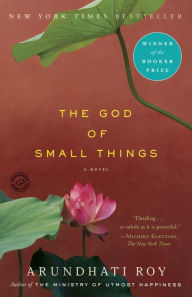
The book for July is The God of Small Things by Arundhati Roy
Winner of the 1997 Booker Prize

From Publishers Weekly - With sensuous prose, a dreamlike style infused with breathtakingly beautiful images and keen insight into human nature, Roy's debut novel charts fresh territory in the genre of magical, prismatic literature. Set in Kerala, India, during the late 1960s when Communism rattled the age-old caste system, the story begins with the funeral of young Sophie Mol, the cousin of the novel's protagonists, Rahel and her fraternal twin brother, Estha. In a circuitous and suspenseful narrative, Roy reveals the family tensions that led to the twins' behavior on the fateful night that Sophie drowned. Beneath the drama of a family tragedy lies a background of local politics, social taboos and the tide of history - all of which come together in a slip of fate, after which a family is irreparably shattered. Roy captures the children's candid observations but clouded understanding of adults' complex emotional lives. Rahel notices that "at times like these, only the Small Things are ever said. The Big Things lurk unsaid inside." Plangent with a sad wisdom, the children's view is never oversimplified, and the adult characters reveal their frailties (and in one case, a repulsively evil power) in subtle and complex ways. While Roy's powers of description are formidable, she sometimes succumbs to overwriting, forcing every minute detail to symbolize something bigger, and the pace of the story slows. But these lapses are few, and her powers coalesce magnificently in the book's second half. Roy's clarity of vision is remarkable, her voice original, her story beautifully constructed and masterfully told. - Copyright 1998 Reed Business Information, Inc.
Available from Santa Fe College and The Alachua County Public Library.
The book for July is The God of Small Things by Arundhati Roy
Winner of the 1997 Booker Prize

From Publishers Weekly - With sensuous prose, a dreamlike style infused with breathtakingly beautiful images and keen insight into human nature, Roy's debut novel charts fresh territory in the genre of magical, prismatic literature. Set in Kerala, India, during the late 1960s when Communism rattled the age-old caste system, the story begins with the funeral of young Sophie Mol, the cousin of the novel's protagonists, Rahel and her fraternal twin brother, Estha. In a circuitous and suspenseful narrative, Roy reveals the family tensions that led to the twins' behavior on the fateful night that Sophie drowned. Beneath the drama of a family tragedy lies a background of local politics, social taboos and the tide of history - all of which come together in a slip of fate, after which a family is irreparably shattered. Roy captures the children's candid observations but clouded understanding of adults' complex emotional lives. Rahel notices that "at times like these, only the Small Things are ever said. The Big Things lurk unsaid inside." Plangent with a sad wisdom, the children's view is never oversimplified, and the adult characters reveal their frailties (and in one case, a repulsively evil power) in subtle and complex ways. While Roy's powers of description are formidable, she sometimes succumbs to overwriting, forcing every minute detail to symbolize something bigger, and the pace of the story slows. But these lapses are few, and her powers coalesce magnificently in the book's second half. Roy's clarity of vision is remarkable, her voice original, her story beautifully constructed and masterfully told. - Copyright 1998 Reed Business Information, Inc.
Available from Santa Fe College and The Alachua County Public Library.
Thursday, May 28, 2015
June's Meeting
June's Meeting will be Tuesday, June 30 at 2:00 pm.
The book for June is Letters from Skye by Jessica Brockmole
From Publisher's Weekly: Brockmole uses letters to tell a remarkable story of two women, their loves, their secrets, and two world wars, cutting to the important matters that letter writers struggle to put into just the right words. In 1912, young poet Mrs. Elspeth Dunn, who has never left Scotland’s Isle of Skye because of her fear of boats, receives her first fan letter from David Graham, a college student in Urbana, Ill. They begin a long correspondence. After Elspeth’s husband goes off to war, she overcomes her fear and crosses to London to meet briefly with David, who is on his way to France to serve in the American Ambulance Field Service. Interspersed with Elspeth and David’s letters are 1940 missives from Margaret, Elspeth’s daughter, to her uncle and her fiancé as she tries to find out about her father, since Elspeth will not talk about her past. The beauty of Scotland, the tragedy of war, the longings of the heart, and the struggles of a family torn apart by disloyalty are brilliantly drawn, leaving just enough blanks to be filled by the reader’s imagination. Agent: Courtney Miller-Callihan, Sanford J. Greenburger Associates. (July 2014)
Available from Santa Fe College and The Alachua County Public Library.
The book for June is Letters from Skye by Jessica Brockmole
From Publisher's Weekly: Brockmole uses letters to tell a remarkable story of two women, their loves, their secrets, and two world wars, cutting to the important matters that letter writers struggle to put into just the right words. In 1912, young poet Mrs. Elspeth Dunn, who has never left Scotland’s Isle of Skye because of her fear of boats, receives her first fan letter from David Graham, a college student in Urbana, Ill. They begin a long correspondence. After Elspeth’s husband goes off to war, she overcomes her fear and crosses to London to meet briefly with David, who is on his way to France to serve in the American Ambulance Field Service. Interspersed with Elspeth and David’s letters are 1940 missives from Margaret, Elspeth’s daughter, to her uncle and her fiancé as she tries to find out about her father, since Elspeth will not talk about her past. The beauty of Scotland, the tragedy of war, the longings of the heart, and the struggles of a family torn apart by disloyalty are brilliantly drawn, leaving just enough blanks to be filled by the reader’s imagination. Agent: Courtney Miller-Callihan, Sanford J. Greenburger Associates. (July 2014)
Available from Santa Fe College and The Alachua County Public Library.
Wednesday, April 29, 2015
May's Book
May's Meeting will be Tuesday, May 26 in room Y-233.
The book for May is The Storied Life of A. J. Fikry by Gabrielle Zevin
From Publisher's Weekly: The only thing that’s “storied” in the life of A.J. Fikry, a curmudgeonly independent bookseller, in this funny, sad novel from Zevin (The Hole We’re In), is his obvious love of literature—particularly short stories. Fikry runs Island Books, located on Alice Island, a fictional version of Martha’s Vineyard. It’s a “persnickety little bookstore,” in the words of Amelia Loman, the new sales rep for Knightley Press. Her first meeting with Fikry does not go well. He’s disgruntled by the state of publishing, and bereft because his beloved wife, Nic, recently died in a car accident. Soon after the meeting, he suffers another loss: a rare first edition of Edgar Allan Poe’s poem Tamerlane (Fikry’s primary retirement asset) goes missing. But then Fikry finds an abandoned toddler in his bookstore with a note saying, “This is Maya. She is twenty-five months old.” Somewhat unbelievably, Maya ends up in his care and, predictably enough, opens the irascible bookseller’s heart. The surprisingly expansive story includes a romance between Fikry and Amelia, and follows Maya to the age of 18 before arriving at a bittersweet denouement. Zevin is a deft writer, clever and witty, and her affection for the book business is obvious. Agent: Doug Stewart, Sterling Lord Literistic. (Apr.)
Available from Santa Fe College and The Alachua County Public Library.
Future Books
June - Letters from Skye by Jessica Brockmole
July - God of Small Things by Arundhati Roy
August - 97 Orchard: An Edible History of Five Immigrant Families in One New York Tenement by Jane Ziegelman
The book for May is The Storied Life of A. J. Fikry by Gabrielle Zevin
From Publisher's Weekly: The only thing that’s “storied” in the life of A.J. Fikry, a curmudgeonly independent bookseller, in this funny, sad novel from Zevin (The Hole We’re In), is his obvious love of literature—particularly short stories. Fikry runs Island Books, located on Alice Island, a fictional version of Martha’s Vineyard. It’s a “persnickety little bookstore,” in the words of Amelia Loman, the new sales rep for Knightley Press. Her first meeting with Fikry does not go well. He’s disgruntled by the state of publishing, and bereft because his beloved wife, Nic, recently died in a car accident. Soon after the meeting, he suffers another loss: a rare first edition of Edgar Allan Poe’s poem Tamerlane (Fikry’s primary retirement asset) goes missing. But then Fikry finds an abandoned toddler in his bookstore with a note saying, “This is Maya. She is twenty-five months old.” Somewhat unbelievably, Maya ends up in his care and, predictably enough, opens the irascible bookseller’s heart. The surprisingly expansive story includes a romance between Fikry and Amelia, and follows Maya to the age of 18 before arriving at a bittersweet denouement. Zevin is a deft writer, clever and witty, and her affection for the book business is obvious. Agent: Doug Stewart, Sterling Lord Literistic. (Apr.)
Available from Santa Fe College and The Alachua County Public Library.
Future Books
June - Letters from Skye by Jessica Brockmole
July - God of Small Things by Arundhati Roy
August - 97 Orchard: An Edible History of Five Immigrant Families in One New York Tenement by Jane Ziegelman
Wednesday, January 28, 2015
February's Meeting
February's Meeting will be Tuesday, February 24 at 2:00 pm.
The book for February is The Book of Madness and Cures by Regina O'Melveny
From Library Journal: Poet O'Melveny's debut fiction is like a lyrical composite creature--part father/daughter epistolary novel, part aristocratic diary, part adventurer's travelogue, and part compendium of allegorical diseases. When 16th-century Venetian doctor Gabriella Mondini is barred from practicing medicine, she sets off across Europe in search of her father, a respected doctor who left under mysterious circumstances 10 years ago to gather material for his Book of Diseases. As a rare female doctor, Gabriella needs his mentorship, but his letters have grown increasingly incoherent, as she follows his route, she hears disturbing stories about his erratic behavior. Forced to cut off her distinctive red hair, she travels as a man through villages empty of women and girls after mass witch burnings. Her own adventures begin to rival the tales in her father's letters as she encounters suspicion, condescension, respect, and even romance. Gabriella's father continues to elude her, and she must face the possibility that she no longer knows where to find him. Yet she cannot resume her own life until she does. Gabriella's servants Olmina and Lorenzo accompany her and act as a pair of Sancho Panzas, providing mild salt-of-the-earth comic relief when not worn down by a yearning for home. By the time Gabriella reaches Morocco, where she believes her father to be, she too yearns for the comforts of Venice. But she has changed in ways that will greatly complicate her return. Readers will be delighted by O'Melveny's whimsical embellishments, though veterans of historical fiction may balk at the poetic, metaphor-laden prose and fancifully piebald construction. Maps. Agent: Daniel Lazar. Writers House. (Apr.)
The book for February is The Book of Madness and Cures by Regina O'Melveny
From Library Journal: Poet O'Melveny's debut fiction is like a lyrical composite creature--part father/daughter epistolary novel, part aristocratic diary, part adventurer's travelogue, and part compendium of allegorical diseases. When 16th-century Venetian doctor Gabriella Mondini is barred from practicing medicine, she sets off across Europe in search of her father, a respected doctor who left under mysterious circumstances 10 years ago to gather material for his Book of Diseases. As a rare female doctor, Gabriella needs his mentorship, but his letters have grown increasingly incoherent, as she follows his route, she hears disturbing stories about his erratic behavior. Forced to cut off her distinctive red hair, she travels as a man through villages empty of women and girls after mass witch burnings. Her own adventures begin to rival the tales in her father's letters as she encounters suspicion, condescension, respect, and even romance. Gabriella's father continues to elude her, and she must face the possibility that she no longer knows where to find him. Yet she cannot resume her own life until she does. Gabriella's servants Olmina and Lorenzo accompany her and act as a pair of Sancho Panzas, providing mild salt-of-the-earth comic relief when not worn down by a yearning for home. By the time Gabriella reaches Morocco, where she believes her father to be, she too yearns for the comforts of Venice. But she has changed in ways that will greatly complicate her return. Readers will be delighted by O'Melveny's whimsical embellishments, though veterans of historical fiction may balk at the poetic, metaphor-laden prose and fancifully piebald construction. Maps. Agent: Daniel Lazar. Writers House. (Apr.)
Thursday, November 20, 2014
January's Meeting
January's Meeting will be Tuesday, January 27 at 2:00 pm.
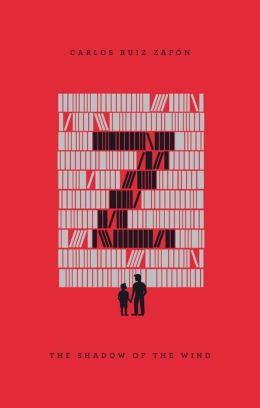
The Book for January is Shadow of the Wind by Carlos Ruiz Zafón.
Shadow of the Wind
From Publisher's Weekly:
Ruiz Zafon's novel, a bestseller in his native Spain, takes the satanic touches from Angel Heart and stirs them into a bookish intrigue la Foucault's Pendulum. The time is the 1950s; the place, Barcelona. Daniel Sempere, the son of a widowed bookstore owner, is 10 when he discovers a novel, The Shadow of the Wind, by Juli n Carax. The novel is rare, the author obscure, and rumors tell of a horribly disfigured man who has been burning every copy he can find of Carax's novels. The man calls himself Lain Coubert-the name of the devil in one of Carax's novels. As he grows up, Daniel's fascination with the mysterious Carax links him to a blind femme fatale with a "porcelain gaze," Clara Barcelo; another fan, a leftist jack-of-all-trades, Fermin Romero de Torres; his best friend's sister, the delectable Beatriz Aguilar; and, as he begins investigating the life and death of Carax, a cast of characters with secrets to hide. Officially, Carax's dead body was dumped in an alley in 1936. But discrepancies in this story surface. Meanwhile, Daniel and Fermin are being harried by a sadistic policeman, Carax's childhood friend. As Daniel's quest continues, frightening parallels between his own life and Carax's begin to emerge. Ruiz Zafon strives for a literary tone, and no scene goes by without its complement of florid, cute and inexact similes and metaphors (snow is "God's dandruff"; servants obey orders with "the efficiency and submissiveness of a body of well-trained insects"). Yet the colorful cast of characters, the gothic turns and the straining for effect only give the book the feel of para-literature or the Hollywood version of a great 19th-century novel. (Apr. 12) Forecast: Appealing packaging (a weathered, antique-look jacket), prepublication bookseller events and an eight-city author tour should give this an early boost, though momentum may flag down the stretch. Copyright 2004 Reed Business Information.
February - The Book of Madness and Cures by Regina O'Melveny
March - The Unlikely Pilgrimage of Harold Fry by Rachel Joyce
April - Dearie: The Remarkable Life of Julia Child by Bob Spitz
The Book for January is Shadow of the Wind by Carlos Ruiz Zafón.
Shadow of the Wind
From Publisher's Weekly:
Ruiz Zafon's novel, a bestseller in his native Spain, takes the satanic touches from Angel Heart and stirs them into a bookish intrigue la Foucault's Pendulum. The time is the 1950s; the place, Barcelona. Daniel Sempere, the son of a widowed bookstore owner, is 10 when he discovers a novel, The Shadow of the Wind, by Juli n Carax. The novel is rare, the author obscure, and rumors tell of a horribly disfigured man who has been burning every copy he can find of Carax's novels. The man calls himself Lain Coubert-the name of the devil in one of Carax's novels. As he grows up, Daniel's fascination with the mysterious Carax links him to a blind femme fatale with a "porcelain gaze," Clara Barcelo; another fan, a leftist jack-of-all-trades, Fermin Romero de Torres; his best friend's sister, the delectable Beatriz Aguilar; and, as he begins investigating the life and death of Carax, a cast of characters with secrets to hide. Officially, Carax's dead body was dumped in an alley in 1936. But discrepancies in this story surface. Meanwhile, Daniel and Fermin are being harried by a sadistic policeman, Carax's childhood friend. As Daniel's quest continues, frightening parallels between his own life and Carax's begin to emerge. Ruiz Zafon strives for a literary tone, and no scene goes by without its complement of florid, cute and inexact similes and metaphors (snow is "God's dandruff"; servants obey orders with "the efficiency and submissiveness of a body of well-trained insects"). Yet the colorful cast of characters, the gothic turns and the straining for effect only give the book the feel of para-literature or the Hollywood version of a great 19th-century novel. (Apr. 12) Forecast: Appealing packaging (a weathered, antique-look jacket), prepublication bookseller events and an eight-city author tour should give this an early boost, though momentum may flag down the stretch. Copyright 2004 Reed Business Information.
Upcoming books:
February - The Book of Madness and Cures by Regina O'Melveny
March - The Unlikely Pilgrimage of Harold Fry by Rachel Joyce
April - Dearie: The Remarkable Life of Julia Child by Bob Spitz
Wednesday, July 30, 2014
August's Book
Our next meeting will be Tuesday, August 26 at 2:00 pm in room Y-332.
The book for August is Midnight in Peking: How the Murder of a Young Englishwoman Haunted the Last Days of Old China by Paul French
From Publisher's Weekly: Historian French (Through the Looking Glass: China’s Foreign Journalists from Opium Wars to Mao) unravels a long-forgotten 1937 murder in this fascinating look at Peking (now Beijing) on the brink of Japanese occupation. The severely mutilated body of 19-year-old Pamela Werner—the adopted daughter of noted Sinologist and longtime Peking resident Edward Werner—was discovered, with many of her organs removed, near the border between the Badlands, a warren of alleyways full of brothels and opium dens, and the Legation Quarter, where Peking’s foreign set resided in luxury. A case immediately fraught with tension was made even trickier when the local detective, Col. Han Shih-ching, was made to work alongside Scotland Yard–trained Richard Dennis, based in Tientsin. The investigation soon stalled: the actual scene of Pamela’s murder could not be found, and leads fizzled out. As China’s attention turned to the looming Japanese occupation, the case was deemed “unsolved.” French painstakingly reconstructs the crime and depicts the suspects—using Werner’s own independent research, conducted after authorities refused to reopen his daughter’s case. Compelling evidence is coupled with a keen grasp of Chinese history in French’s worthy account. (May)
The book for August is Midnight in Peking: How the Murder of a Young Englishwoman Haunted the Last Days of Old China by Paul French
From Publisher's Weekly: Historian French (Through the Looking Glass: China’s Foreign Journalists from Opium Wars to Mao) unravels a long-forgotten 1937 murder in this fascinating look at Peking (now Beijing) on the brink of Japanese occupation. The severely mutilated body of 19-year-old Pamela Werner—the adopted daughter of noted Sinologist and longtime Peking resident Edward Werner—was discovered, with many of her organs removed, near the border between the Badlands, a warren of alleyways full of brothels and opium dens, and the Legation Quarter, where Peking’s foreign set resided in luxury. A case immediately fraught with tension was made even trickier when the local detective, Col. Han Shih-ching, was made to work alongside Scotland Yard–trained Richard Dennis, based in Tientsin. The investigation soon stalled: the actual scene of Pamela’s murder could not be found, and leads fizzled out. As China’s attention turned to the looming Japanese occupation, the case was deemed “unsolved.” French painstakingly reconstructs the crime and depicts the suspects—using Werner’s own independent research, conducted after authorities refused to reopen his daughter’s case. Compelling evidence is coupled with a keen grasp of Chinese history in French’s worthy account. (May)
Wednesday, June 25, 2014
July's Book
July's Greedy Reader Meeting will be Tuesday, July 29 in room Y-233
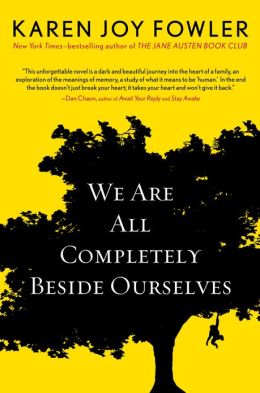
July's Book: Life after Life by Karen Joy Fowler
From Publisher's Weekly: It’s worth the trouble to avoid spoilers, including the ones on the back cover, for Fowler’s marvelous new novel; let her introduce the troubled Cooke family before she springs the jaw-dropping surprise at the heart of the story. Youngest daughter Rosemary is a college student acting on dangerous impulses; her first connection with wild-child Harlow lands the two in jail. Rosemary and the FBI are both on the lookout for her brother Lowell, who ran away after their sister Fern vanished. Rosemary won’t say right away what it was that left their mother in a crippling depression and their psychology professor father a bitter drunk, but she has good reasons for keeping quiet; what happens to Fern is completely shattering, reshaping the life of every member of the family. In the end, when Rosemary’s mother tells her, “I wanted you to have an extraordinary life,” it feels like a fairy-tale curse. But Rosemary’s experience isn’t only heartbreak; it’s a fascinating basis for insight into memory, the mind, and human development. Even in her most broken moments, Rosemary knows she knows things that no one else can know about what it means to be a sister, and a human being. Fowler’s (The Jane Austen Book Club) great accomplishment is not just that she takes the standard story of a family and makes it larger, but that the new space she’s created demands exploration. Agent: Wendy Weil, the Wendy Weil Agency. (June)
July's Book: Life after Life by Karen Joy Fowler
From Publisher's Weekly: It’s worth the trouble to avoid spoilers, including the ones on the back cover, for Fowler’s marvelous new novel; let her introduce the troubled Cooke family before she springs the jaw-dropping surprise at the heart of the story. Youngest daughter Rosemary is a college student acting on dangerous impulses; her first connection with wild-child Harlow lands the two in jail. Rosemary and the FBI are both on the lookout for her brother Lowell, who ran away after their sister Fern vanished. Rosemary won’t say right away what it was that left their mother in a crippling depression and their psychology professor father a bitter drunk, but she has good reasons for keeping quiet; what happens to Fern is completely shattering, reshaping the life of every member of the family. In the end, when Rosemary’s mother tells her, “I wanted you to have an extraordinary life,” it feels like a fairy-tale curse. But Rosemary’s experience isn’t only heartbreak; it’s a fascinating basis for insight into memory, the mind, and human development. Even in her most broken moments, Rosemary knows she knows things that no one else can know about what it means to be a sister, and a human being. Fowler’s (The Jane Austen Book Club) great accomplishment is not just that she takes the standard story of a family and makes it larger, but that the new space she’s created demands exploration. Agent: Wendy Weil, the Wendy Weil Agency. (June)
Wednesday, May 21, 2014
June's Meeting
June's Meeting will be Tuesday, June 24 at 2:00 in room Y-130
June's Book:
Life After Life by Kate Atkinson
From Booklist: *Starred Review* In a radical departure from her Jackson Brodie mystery series, Atkinson delivers a wildly inventive novel about Ursula Todd, born in 1910 and doomed to die and be reborn over and over again. She drowns, falls off a roof, and is beaten to death by an abusive husband but is always reborn back into the same loving family, sometimes with the knowledge that allows her to escape past poor decisions, sometimes not. As Atkinson subtly delineates all the pathways a life or a country might take, she also delivers a harrowing set piece on the Blitz as Ursula, working as a warden on a rescue team, encounters horrifying tableaux encompassing mangled bodies and whole families covered in ash, preserved just like the victims of Pompeii. Alternately mournful and celebratory, deeply empathic and scathingly funny, Atkinson shows what it is like to face the horrors of war and yet still find the determination to go on, with her wholly British characters often reducing the Third Reich to “a fuss.” From her deeply human characters to her comical dialogue to her meticulous plotting, Atkinson is working at the very top of her game. An audacious, thought-provoking novel from one of our most talented writers. Joanne Wilkinson --This text refers to the Hardcover edition.
June's Book:
Life After Life by Kate AtkinsonFrom Booklist: *Starred Review* In a radical departure from her Jackson Brodie mystery series, Atkinson delivers a wildly inventive novel about Ursula Todd, born in 1910 and doomed to die and be reborn over and over again. She drowns, falls off a roof, and is beaten to death by an abusive husband but is always reborn back into the same loving family, sometimes with the knowledge that allows her to escape past poor decisions, sometimes not. As Atkinson subtly delineates all the pathways a life or a country might take, she also delivers a harrowing set piece on the Blitz as Ursula, working as a warden on a rescue team, encounters horrifying tableaux encompassing mangled bodies and whole families covered in ash, preserved just like the victims of Pompeii. Alternately mournful and celebratory, deeply empathic and scathingly funny, Atkinson shows what it is like to face the horrors of war and yet still find the determination to go on, with her wholly British characters often reducing the Third Reich to “a fuss.” From her deeply human characters to her comical dialogue to her meticulous plotting, Atkinson is working at the very top of her game. An audacious, thought-provoking novel from one of our most talented writers. Joanne Wilkinson --This text refers to the Hardcover edition.
Thursday, May 1, 2014
May's Book
The next Greedy Reader meeting will be Tuesday, May 20 at 2:00 pm in room Y-233.
The book for May is A Constellation of Vital Phenomena by Anthony Marra
From the Publisher: In a small rural village in Chechnya, eight-year-old Havaa watches from the woods as Russian soldiers abduct her father in the middle of the night and then set fire to her home. When their lifelong neighbor Akhmed finds Havaa hiding in the forest with a strange blue suitcase, he makes a decision that will forever change their lives. He will seek refuge at the abandoned hospital where the sole remaining doctor, Sonja Rabina, treats the wounded.
For Sonja, the arrival of Akhmed and Havaa is an unwelcome surprise. Weary and overburdened, she has no desire to take on additional risk and responsibility. But over the course of five extraordinary days, Sonja’s world will shift on its axis and reveal the intricate pattern of connections that weaves together the pasts of these three unlikely companions and unexpectedly decides their fate. A story of the transcendent power of love in wartime, A Constellation of Vital Phenomena is a work of sweeping breadth, profound compassion, and lasting significance.
New York Times Notable Book of the Year * Washington Post Top Ten Book of the Year
Thursday, March 27, 2014
April's Book
April's meeting will be Tuesday, April 29, 2014, at 2:00 pm in room Y-233.
For April we will be reading Devil in the Grove: Thurgood Marshall, the Groveland Boys, and the Dawn of a New America by Gilbert King.
From Publisher's Weekly:
In July 1949, four black men in Florida (the “Groveland Four”) were accused of raping a white woman. By the time Marshall joined the case in August, one of the defendants—who had fled into the swamps—had been “lawfully killed.” After a trial of the remaining three, two were sentenced to death, and one to life imprisonment. On Marshall’s appeal, the Supreme Court ordered a new trial for the two on death row, though both men were shot while being transported between prisons before the second trial began, and only one survived. Using unredacted Groveland FBI case files and the NAACP’s Legal Defense Fund files, journalist King (The Execution of Willie Francis: Race, Murder, and the Search for Justice in the American South) revisits an oft-overlooked case, with its accuser, whose testimony was patently false; defendants, who suffered terribly as a consequence; local police officials and lawyers who persecuted and prosecuted them; and their lawyers, who showed remarkable courage and perseverance in seeking justice. The story’s drama and pathos make it a page-turner, but King’s attention to detail, fresh material, and evenhanded treatment of the villains make it a worthy contribution to the history of the period, while offering valuable insight into Marshall’s work and life. Agent: Farley Chase, the Waxman Literary Agency. (Mar.)
For April we will be reading Devil in the Grove: Thurgood Marshall, the Groveland Boys, and the Dawn of a New America by Gilbert King.
From Publisher's Weekly:
In July 1949, four black men in Florida (the “Groveland Four”) were accused of raping a white woman. By the time Marshall joined the case in August, one of the defendants—who had fled into the swamps—had been “lawfully killed.” After a trial of the remaining three, two were sentenced to death, and one to life imprisonment. On Marshall’s appeal, the Supreme Court ordered a new trial for the two on death row, though both men were shot while being transported between prisons before the second trial began, and only one survived. Using unredacted Groveland FBI case files and the NAACP’s Legal Defense Fund files, journalist King (The Execution of Willie Francis: Race, Murder, and the Search for Justice in the American South) revisits an oft-overlooked case, with its accuser, whose testimony was patently false; defendants, who suffered terribly as a consequence; local police officials and lawyers who persecuted and prosecuted them; and their lawyers, who showed remarkable courage and perseverance in seeking justice. The story’s drama and pathos make it a page-turner, but King’s attention to detail, fresh material, and evenhanded treatment of the villains make it a worthy contribution to the history of the period, while offering valuable insight into Marshall’s work and life. Agent: Farley Chase, the Waxman Literary Agency. (Mar.)
Subscribe to:
Posts (Atom)