The October Meeting will be Tuesday, October 27 at 2pm in room Y-233.
The Book for October is Americanah by Chimamanda Ngozi Adichie.
From Booklist: *Starred Review* To the women in the hair-braiding salon, Ifemelu seems to have everything a Nigerian immigrant in America could desire, but the culture shock, hardships, and racism she’s endured have left her feeling like she has “cement in her soul.” Smart, irreverent, and outspoken, she reluctantly left Nigeria on a college scholarship. Her aunty Uju, the pampered mistress of a general in Lagos, is now struggling on her own in the U.S., trying to secure her medical license. Ifemelu’s discouraging job search brings on desperation and depression until a babysitting gig leads to a cashmere-and-champagne romance with a wealthy white man. Astonished at the labyrinthine racial strictures she’s confronted with, Ifemelu, defining herself as a “Non-American Black,” launches an audacious, provocative, and instantly popular blog in which she explores what she calls Racial Disorder Syndrome. Meanwhile, her abandoned true love, Obinze, is suffering his own cold miseries as an unwanted African in London. MacArthur fellow Adichie (The Thing around Your Neck, 2009) is a word-by-word virtuoso with a sure grasp of social conundrums in Nigeria, East Coast America, and England; an omnivorous eye for resonant detail; a gift for authentic characters; pyrotechnic wit; and deep humanitarianism. Americanah is a courageous, world-class novel about independence, integrity, community, and love and what it takes to become a “full human being.” --Donna Seaman
Thursday, October 22, 2015
Sunday, September 13, 2015
September's Book
September's Meeting will be Tuesday, September 29 at 2:00 pm.
The book for September is Orphan Train by Christina Baker Kline
From Library Journal - Kline's latest novel (after Bird in Hand) weaves contemporary and historical fiction into a compelling story about loss, adaptability, and courage. Molly is a rebellious 17-year-old foster child sentenced to community service for stealing a copy of Jane Eyre. She finds a position cleaning out the attic of Vivian, an elderly woman in their coastal Maine town. As Molly sorts through old trunks and boxes, Vivian begins to share stories from her past. Born in County Galway, she immigrated to New York City in 1929. When her family perished in a tenement fire, she was packed off on one of the many orphan trains intended to bring children to Midwestern families who would care for them. Each orphan's lot was largely dependent on the luck of the draw. In this, Vivian's life parallels Molly's, and an unlikely friendship blossoms. VERDICT With compassion and delicacy Kline presents a little-known chapter of American history and draws comparisons with the modern-day foster care system. Her accessible, interesting novel will appeal to readers who enjoy the work of Sara Donati. [See Prepub Alert, 10/22/12.]—Christine Perkins, Bellingham P.L., WA
Available from The Alachua County Public Library.
The book for September is Orphan Train by Christina Baker Kline
From Library Journal - Kline's latest novel (after Bird in Hand) weaves contemporary and historical fiction into a compelling story about loss, adaptability, and courage. Molly is a rebellious 17-year-old foster child sentenced to community service for stealing a copy of Jane Eyre. She finds a position cleaning out the attic of Vivian, an elderly woman in their coastal Maine town. As Molly sorts through old trunks and boxes, Vivian begins to share stories from her past. Born in County Galway, she immigrated to New York City in 1929. When her family perished in a tenement fire, she was packed off on one of the many orphan trains intended to bring children to Midwestern families who would care for them. Each orphan's lot was largely dependent on the luck of the draw. In this, Vivian's life parallels Molly's, and an unlikely friendship blossoms. VERDICT With compassion and delicacy Kline presents a little-known chapter of American history and draws comparisons with the modern-day foster care system. Her accessible, interesting novel will appeal to readers who enjoy the work of Sara Donati. [See Prepub Alert, 10/22/12.]—Christine Perkins, Bellingham P.L., WA
Available from The Alachua County Public Library.
Wednesday, August 19, 2015
August's Book
August's Meeting will be Tuesday, August 25 at 2:00 pm.
The book for August is 97 Orchard: An Edible History of Five Immigrant Families in One New York Tenement by Jane Ziegelman
From Library Journal - Ninety-seven Orchard was an address shared by five immigrant families who lived in one tenement building at different times from the end of the Civil War up to World War II. Ziegelman, who will direct the Culinary Center to open at New York's Tenement Museum, which is the actual 97 Orchard building, documents, in a manner not often found in such social histories, their struggles to adjust to a new way of life in America. Interspersed among the tales of each group are culinary details and specific recipes that add vividly to the flavor and texture of the descriptions of the hardscrabble life these families—German, Irish, Jewish, and Italian—experienced. The multitude of gastronomic details, from the origin of snack shops called delicatessens to the growing popularity of something called macaroni, are painstakingly described. It is an eye-opening exploration of the social and economic history of those who thrived and survived, in spite of significant odds, on New York's Lower East Side. VERDICT Recommended for those seeking up-close and personal—as well as edible—insights into the daily lives of late 19th- and early 20th-century "new Americans."—Claire Franek, MSLS, Brockport, NY
Available from The Alachua County Public Library.
The book for August is 97 Orchard: An Edible History of Five Immigrant Families in One New York Tenement by Jane Ziegelman
From Library Journal - Ninety-seven Orchard was an address shared by five immigrant families who lived in one tenement building at different times from the end of the Civil War up to World War II. Ziegelman, who will direct the Culinary Center to open at New York's Tenement Museum, which is the actual 97 Orchard building, documents, in a manner not often found in such social histories, their struggles to adjust to a new way of life in America. Interspersed among the tales of each group are culinary details and specific recipes that add vividly to the flavor and texture of the descriptions of the hardscrabble life these families—German, Irish, Jewish, and Italian—experienced. The multitude of gastronomic details, from the origin of snack shops called delicatessens to the growing popularity of something called macaroni, are painstakingly described. It is an eye-opening exploration of the social and economic history of those who thrived and survived, in spite of significant odds, on New York's Lower East Side. VERDICT Recommended for those seeking up-close and personal—as well as edible—insights into the daily lives of late 19th- and early 20th-century "new Americans."—Claire Franek, MSLS, Brockport, NY
Available from The Alachua County Public Library.
Wednesday, July 1, 2015
July's Book
July's Meeting will be Tuesday, July 28 at 2:00 pm.
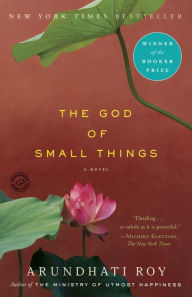
The book for July is The God of Small Things by Arundhati Roy
Winner of the 1997 Booker Prize

From Publishers Weekly - With sensuous prose, a dreamlike style infused with breathtakingly beautiful images and keen insight into human nature, Roy's debut novel charts fresh territory in the genre of magical, prismatic literature. Set in Kerala, India, during the late 1960s when Communism rattled the age-old caste system, the story begins with the funeral of young Sophie Mol, the cousin of the novel's protagonists, Rahel and her fraternal twin brother, Estha. In a circuitous and suspenseful narrative, Roy reveals the family tensions that led to the twins' behavior on the fateful night that Sophie drowned. Beneath the drama of a family tragedy lies a background of local politics, social taboos and the tide of history - all of which come together in a slip of fate, after which a family is irreparably shattered. Roy captures the children's candid observations but clouded understanding of adults' complex emotional lives. Rahel notices that "at times like these, only the Small Things are ever said. The Big Things lurk unsaid inside." Plangent with a sad wisdom, the children's view is never oversimplified, and the adult characters reveal their frailties (and in one case, a repulsively evil power) in subtle and complex ways. While Roy's powers of description are formidable, she sometimes succumbs to overwriting, forcing every minute detail to symbolize something bigger, and the pace of the story slows. But these lapses are few, and her powers coalesce magnificently in the book's second half. Roy's clarity of vision is remarkable, her voice original, her story beautifully constructed and masterfully told. - Copyright 1998 Reed Business Information, Inc.
Available from Santa Fe College and The Alachua County Public Library.
The book for July is The God of Small Things by Arundhati Roy
Winner of the 1997 Booker Prize
From Publishers Weekly - With sensuous prose, a dreamlike style infused with breathtakingly beautiful images and keen insight into human nature, Roy's debut novel charts fresh territory in the genre of magical, prismatic literature. Set in Kerala, India, during the late 1960s when Communism rattled the age-old caste system, the story begins with the funeral of young Sophie Mol, the cousin of the novel's protagonists, Rahel and her fraternal twin brother, Estha. In a circuitous and suspenseful narrative, Roy reveals the family tensions that led to the twins' behavior on the fateful night that Sophie drowned. Beneath the drama of a family tragedy lies a background of local politics, social taboos and the tide of history - all of which come together in a slip of fate, after which a family is irreparably shattered. Roy captures the children's candid observations but clouded understanding of adults' complex emotional lives. Rahel notices that "at times like these, only the Small Things are ever said. The Big Things lurk unsaid inside." Plangent with a sad wisdom, the children's view is never oversimplified, and the adult characters reveal their frailties (and in one case, a repulsively evil power) in subtle and complex ways. While Roy's powers of description are formidable, she sometimes succumbs to overwriting, forcing every minute detail to symbolize something bigger, and the pace of the story slows. But these lapses are few, and her powers coalesce magnificently in the book's second half. Roy's clarity of vision is remarkable, her voice original, her story beautifully constructed and masterfully told. - Copyright 1998 Reed Business Information, Inc.
Available from Santa Fe College and The Alachua County Public Library.
Thursday, May 28, 2015
June's Meeting
June's Meeting will be Tuesday, June 30 at 2:00 pm.
The book for June is Letters from Skye by Jessica Brockmole
From Publisher's Weekly: Brockmole uses letters to tell a remarkable story of two women, their loves, their secrets, and two world wars, cutting to the important matters that letter writers struggle to put into just the right words. In 1912, young poet Mrs. Elspeth Dunn, who has never left Scotland’s Isle of Skye because of her fear of boats, receives her first fan letter from David Graham, a college student in Urbana, Ill. They begin a long correspondence. After Elspeth’s husband goes off to war, she overcomes her fear and crosses to London to meet briefly with David, who is on his way to France to serve in the American Ambulance Field Service. Interspersed with Elspeth and David’s letters are 1940 missives from Margaret, Elspeth’s daughter, to her uncle and her fiancĂ© as she tries to find out about her father, since Elspeth will not talk about her past. The beauty of Scotland, the tragedy of war, the longings of the heart, and the struggles of a family torn apart by disloyalty are brilliantly drawn, leaving just enough blanks to be filled by the reader’s imagination. Agent: Courtney Miller-Callihan, Sanford J. Greenburger Associates. (July 2014)
Available from Santa Fe College and The Alachua County Public Library.
The book for June is Letters from Skye by Jessica Brockmole
From Publisher's Weekly: Brockmole uses letters to tell a remarkable story of two women, their loves, their secrets, and two world wars, cutting to the important matters that letter writers struggle to put into just the right words. In 1912, young poet Mrs. Elspeth Dunn, who has never left Scotland’s Isle of Skye because of her fear of boats, receives her first fan letter from David Graham, a college student in Urbana, Ill. They begin a long correspondence. After Elspeth’s husband goes off to war, she overcomes her fear and crosses to London to meet briefly with David, who is on his way to France to serve in the American Ambulance Field Service. Interspersed with Elspeth and David’s letters are 1940 missives from Margaret, Elspeth’s daughter, to her uncle and her fiancĂ© as she tries to find out about her father, since Elspeth will not talk about her past. The beauty of Scotland, the tragedy of war, the longings of the heart, and the struggles of a family torn apart by disloyalty are brilliantly drawn, leaving just enough blanks to be filled by the reader’s imagination. Agent: Courtney Miller-Callihan, Sanford J. Greenburger Associates. (July 2014)
Available from Santa Fe College and The Alachua County Public Library.
Wednesday, April 29, 2015
May's Book
May's Meeting will be Tuesday, May 26 in room Y-233.
The book for May is The Storied Life of A. J. Fikry by Gabrielle Zevin
From Publisher's Weekly: The only thing that’s “storied” in the life of A.J. Fikry, a curmudgeonly independent bookseller, in this funny, sad novel from Zevin (The Hole We’re In), is his obvious love of literature—particularly short stories. Fikry runs Island Books, located on Alice Island, a fictional version of Martha’s Vineyard. It’s a “persnickety little bookstore,” in the words of Amelia Loman, the new sales rep for Knightley Press. Her first meeting with Fikry does not go well. He’s disgruntled by the state of publishing, and bereft because his beloved wife, Nic, recently died in a car accident. Soon after the meeting, he suffers another loss: a rare first edition of Edgar Allan Poe’s poem Tamerlane (Fikry’s primary retirement asset) goes missing. But then Fikry finds an abandoned toddler in his bookstore with a note saying, “This is Maya. She is twenty-five months old.” Somewhat unbelievably, Maya ends up in his care and, predictably enough, opens the irascible bookseller’s heart. The surprisingly expansive story includes a romance between Fikry and Amelia, and follows Maya to the age of 18 before arriving at a bittersweet denouement. Zevin is a deft writer, clever and witty, and her affection for the book business is obvious. Agent: Doug Stewart, Sterling Lord Literistic. (Apr.)
Available from Santa Fe College and The Alachua County Public Library.
Future Books
June - Letters from Skye by Jessica Brockmole
July - God of Small Things by Arundhati Roy
August - 97 Orchard: An Edible History of Five Immigrant Families in One New York Tenement by Jane Ziegelman
The book for May is The Storied Life of A. J. Fikry by Gabrielle Zevin
From Publisher's Weekly: The only thing that’s “storied” in the life of A.J. Fikry, a curmudgeonly independent bookseller, in this funny, sad novel from Zevin (The Hole We’re In), is his obvious love of literature—particularly short stories. Fikry runs Island Books, located on Alice Island, a fictional version of Martha’s Vineyard. It’s a “persnickety little bookstore,” in the words of Amelia Loman, the new sales rep for Knightley Press. Her first meeting with Fikry does not go well. He’s disgruntled by the state of publishing, and bereft because his beloved wife, Nic, recently died in a car accident. Soon after the meeting, he suffers another loss: a rare first edition of Edgar Allan Poe’s poem Tamerlane (Fikry’s primary retirement asset) goes missing. But then Fikry finds an abandoned toddler in his bookstore with a note saying, “This is Maya. She is twenty-five months old.” Somewhat unbelievably, Maya ends up in his care and, predictably enough, opens the irascible bookseller’s heart. The surprisingly expansive story includes a romance between Fikry and Amelia, and follows Maya to the age of 18 before arriving at a bittersweet denouement. Zevin is a deft writer, clever and witty, and her affection for the book business is obvious. Agent: Doug Stewart, Sterling Lord Literistic. (Apr.)
Available from Santa Fe College and The Alachua County Public Library.
Future Books
June - Letters from Skye by Jessica Brockmole
July - God of Small Things by Arundhati Roy
August - 97 Orchard: An Edible History of Five Immigrant Families in One New York Tenement by Jane Ziegelman
Wednesday, January 28, 2015
February's Meeting
February's Meeting will be Tuesday, February 24 at 2:00 pm.
The book for February is The Book of Madness and Cures by Regina O'Melveny
From Library Journal: Poet O'Melveny's debut fiction is like a lyrical composite creature--part father/daughter epistolary novel, part aristocratic diary, part adventurer's travelogue, and part compendium of allegorical diseases. When 16th-century Venetian doctor Gabriella Mondini is barred from practicing medicine, she sets off across Europe in search of her father, a respected doctor who left under mysterious circumstances 10 years ago to gather material for his Book of Diseases. As a rare female doctor, Gabriella needs his mentorship, but his letters have grown increasingly incoherent, as she follows his route, she hears disturbing stories about his erratic behavior. Forced to cut off her distinctive red hair, she travels as a man through villages empty of women and girls after mass witch burnings. Her own adventures begin to rival the tales in her father's letters as she encounters suspicion, condescension, respect, and even romance. Gabriella's father continues to elude her, and she must face the possibility that she no longer knows where to find him. Yet she cannot resume her own life until she does. Gabriella's servants Olmina and Lorenzo accompany her and act as a pair of Sancho Panzas, providing mild salt-of-the-earth comic relief when not worn down by a yearning for home. By the time Gabriella reaches Morocco, where she believes her father to be, she too yearns for the comforts of Venice. But she has changed in ways that will greatly complicate her return. Readers will be delighted by O'Melveny's whimsical embellishments, though veterans of historical fiction may balk at the poetic, metaphor-laden prose and fancifully piebald construction. Maps. Agent: Daniel Lazar. Writers House. (Apr.)
The book for February is The Book of Madness and Cures by Regina O'Melveny
From Library Journal: Poet O'Melveny's debut fiction is like a lyrical composite creature--part father/daughter epistolary novel, part aristocratic diary, part adventurer's travelogue, and part compendium of allegorical diseases. When 16th-century Venetian doctor Gabriella Mondini is barred from practicing medicine, she sets off across Europe in search of her father, a respected doctor who left under mysterious circumstances 10 years ago to gather material for his Book of Diseases. As a rare female doctor, Gabriella needs his mentorship, but his letters have grown increasingly incoherent, as she follows his route, she hears disturbing stories about his erratic behavior. Forced to cut off her distinctive red hair, she travels as a man through villages empty of women and girls after mass witch burnings. Her own adventures begin to rival the tales in her father's letters as she encounters suspicion, condescension, respect, and even romance. Gabriella's father continues to elude her, and she must face the possibility that she no longer knows where to find him. Yet she cannot resume her own life until she does. Gabriella's servants Olmina and Lorenzo accompany her and act as a pair of Sancho Panzas, providing mild salt-of-the-earth comic relief when not worn down by a yearning for home. By the time Gabriella reaches Morocco, where she believes her father to be, she too yearns for the comforts of Venice. But she has changed in ways that will greatly complicate her return. Readers will be delighted by O'Melveny's whimsical embellishments, though veterans of historical fiction may balk at the poetic, metaphor-laden prose and fancifully piebald construction. Maps. Agent: Daniel Lazar. Writers House. (Apr.)
Subscribe to:
Posts (Atom)